

What Makes for a Great Meeting Room?
by Akshayaa Rani M, 18 July 2025Updated 17 November 2025
A great meeting starts with a good meeting space. Whatever your requirement is, from a quick team sync to a client pitch or a high-stakes strategy session, the space you're in is non-negotiable. A great meeting room isn't just the best-looking choice. It should help people focus, feel comfortable, and get things done.
So, then what works? Let's discuss what truly matters when designing a meeting space that people love. We're diving into the essentials — from meeting room acoustics tips to tech that doesn't crash mid-call. If you're building from scratch or just tweaking what you've got, here's what to keep in mind.
The Space Should Match the Mood
Every meeting room tells you something the second you walk in. Sleek and minimal? Probably a space for focused strategy. Bright and relaxed? Likely built for ideas to bounce around. The best spaces are those that match the mood they're meant to evoke.
So start with smart meeting room design ideas that go beyond aesthetics. Think flow, lighting, comfort, and flexibility. A small room for quick check-ins doesn't need the drama of a boardroom table. Likewise, a space meant for team collaboration should invite people to move, scribble on walls, and throw around ideas without feeling stiff.
And if you're planning multiple rooms? This is where meeting room naming ideas come in. A little creativity here not only makes navigation easier, it sets expectations for what kind of meeting happens inside.
Let's Talk The Best Meeting Room Layouts
Layouts should follow the way people meet. Some rooms are made for formality: long tables, big chairs, screens at one end. That classic boardroom style may seem boring but it's a fantastic choice for meetings where there's a clear agenda and someone leading the conversation.
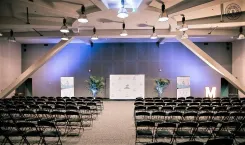
For bigger groups where the goal is to share information, theatre-style seating can be productive. Everyone faces forward, and it's clear who's speaking.
When the focus is on discussion, a U-shape layout facilitates conversations that flow smoothly without participants talking over each other. It keeps things open without feeling messy.
Some teams work better in smaller groups. Clusters of tables give people space to break off, chat, and come back together when needed. It's a more relaxed setup, which keeps the energy up. And in some cases, it helps to lose the chairs altogether. Standing rooms can shift the pace: quicker updates, sharper focus, fewer rambling tangents. You could also consider tools that support hybrid setups. Exploring the best virtual office software can make these arrangements even more effective.
Ultimately, the best meeting room layout is the one that works for your agenda.
The Tech Every Good Meeting Room Needs
We've all been in that room where it takes 15 minutes to connect to a screen, or the mic keeps cutting out. A room's meeting technology requirements need to support, not sabotage, the meeting.
Here's what modern rooms absolutely need:
- A reliable display system (projector or large screen)
- Wireless connectivity and screen sharing
- Quality audio and video conferencing tools
- Smart booking systems
- Accessible power outlets and charging stations
This is especially important for a good hybrid meeting room setup, where part of the team might be remote. Clear audio, good lighting, and a strong camera angle make sure everyone feels equally included — no second-class meeting citizens here. To streamline follow-ups and capture action items automatically, AI meeting notes tools can also be used to record and summarize discussions efficiently.
Small Meeting Room Design Tips
Sometimes intimate meetings can be uber productive. From quick catch-ups to one-on-ones, or private calls, small meeting rooms have a solid purpose so don't treat it like an afterthought.
Smart small meeting room design involves maximising the use of available square footage. Here are some tips on how to get that done:
- Wall-mounted screens to save space
- Comfortable seating without bulk
- Clean lines and calming colours to avoid a cramped feeling
And hey, a little natural light or a plant or two. Small doesn't have to mean sad.
Meeting Room Acoustic Tips That Matter
People underestimate sound. But poor acoustics can absolutely tank a good meeting. Echoey rooms, background noise, or just too much reverb? It's distracting and exhausting.
Here are some quick meeting room acoustics tips:
- Don't use concrete walls or glass boxes unless you're adding sound-absorbing materials.
- Instead, opt for panels, soft furnishings, or even acoustic ceiling tiles
- Think about privacy. Many confidential conversations can occur here, so please keep it soundproof.
Fixing the sound might not look as cool as installing a huge screen, but it makes everything feel better.
Get access to the event industry's inside scoop
Take a Seat (But Make It Ergonomic)
We get it. Office chairs aren't supposed to be thrones. But if you want people to stay sharp through a 90-minute meeting, don't make them sit on something designed by a sadist.
Ergonomic meeting room furniture doesn't mean ugly. It just means supportive. Adjustable chairs, tables at a proper height, even a little variation in seating types if space allows. Give people options. Comfort matters more than you think.
Let There Be (Good) Light
Good lighting changes how a room feels. People focus better, screens are easier to look at, and the whole space just works more effectively without trying too hard.
With meeting room lighting design, it doesn't need to be complicated. If the room gets natural light, great — use it. If not, a mix of ceiling lights and something softer off to the side usually does the trick. After all, very few people can function well under harsh fluorescent lights.
It's not mandatory, but if the lights can dim or shift depending on the time of day, it's even better. It's a small detail, but trust us, your participants will appreciate it.
Design for Collaboration
A good meeting room supports conversation. A great one encourages collaboration. That's where collaborative meeting space design comes in.
Try writable surfaces. Movable chairs. Shared screens that multiple people can cast to. A good meeting room should have enough flexibility to change based on the agenda.
Contrary to popular belief, collaboration isn't just about sitting together. How easy it is to share, to move, and to think out loud plays a huge role too so make sure your meeting room facilitates that.
Keep It Fresh With Modern Meeting Room Design Ideas
Modern meeting room design ideas are shaped by how people actually work now. Furniture that moves easily so the same space can handle a quick check-in or a longer strategy session.
Materials that are low-impact but don't feel cold. A bit of greenery to soften the edges or a wall with some texture for a pop of personality.
Hybrid setups and accessibility features are in high demand, and a good meeting room understands this.
Finally, the little things matter too. A spot for phones. A place to grab water — they're minor details, but trust us, your participants will notice.
Don't Skip the Meeting Room AV Setup
Your meeting room AV setup should be smooth, simple, and tested regularly. A good AV setup includes:
- High-quality cameras and mics for video calls
- Echo-cancelling speakers
- Easy-to-use control panels or remote apps
- Backup options for when things go wrong
It's not about having the flashiest tech. It's about making sure everything works every time.
Wrapping Up
A good meeting room doesn't try too hard. It just works. It gives people enough space to think clearly, speak freely, and stay focused.
Strong meeting room design ideas aren't about trends. They're about understanding how the space will be used and ensuring nothing gets in the way.
- The Space Should Match the Mood
- Let's Talk The Best Meeting Room Layouts
- The Tech Every Good Meeting Room Needs
- Small Meeting Room Design Tips
- Meeting Room Acoustic Tips That Matter
- Take a Seat (But Make It Ergonomic)
- Let There Be (Good) Light
- Design for Collaboration
- Keep It Fresh With Modern Meeting Room Design Ideas
- Wrapping Up


Related articles

Every corporate event planner eventually faces the same fork in the road. You need a venue in a city you don't know

The biggest moves at major conferences aren't happening in the keynote hall anymore. They're happening in rooftop bars,

Planning a corporate offsite can transform the way your team works together. When designed thoughtfully, an offsite

In an era defined by virtual fatigue and sensory overload, a quiet shift is redefining professional networking:

Here’s an interesting fact: U.S. consumers worldwide prefer promo products over all other forms of advertising. In

Let's face facts: the standard corporate networking event is a social failure. It's awkward and can even be intimidating

In today's professional landscape, event safety extends far beyond fire exits, first aid stations and crowd management.

Here's a scenario most event planners know all too well: scroll through LinkedIn and it's easy to believe an event is

Have you heard about the Hook Formula? Not to be confused with Nir Eyal’s Hook Model or the popular ‘Hook Story-Offer’

We're heading into the final stretch of 2025, and one thing remains true: growth comes from relationships. And the best
When it comes to planning a conference, the venue is probably one of the biggest decisions a planner has to make. Not

AI has made it possible to turn almost any idea into an image. A figure in medieval armour, a dragon in neon-pink
Get access to the event industry's inside scoop