

How Technology Enhances Event Security: Biometrics and Digital Passes
by Eventflare, 25 March 2025
There’s a quiet revolution underway—not in how we attend events, but in how we’re recognised, admitted, and protected within them. Credentials, once flimsy slips of paper or generic plastic passes, have evolved into elegant digital artefacts, while identity itself has become biometric—a fingerprint, a glance, a whisper of presence. No more jostling in queues or fumbling for badges. At the intersection of precision and poise, technology has rewritten the guest list. This isn’t about futurism for show—it’s about reimagining access as something seamless, secure, and dare we say, a little bit seductive.
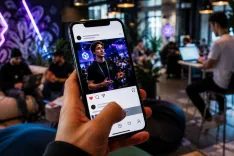
(Photo Credits: Embross)
Welcome to the Future—No ID Required
Imagine gliding into a high-profile art fair, music festival, or architectural summit without fumbling through your bag for a QR code or photo ID. Instead, a quiet scan of your face or fingerprint ushers you past security with the sort of discretion once reserved for private club members. This isn’t science fiction—it’s biometric technology taking centre stage.
Biometric solutions such as facial recognition, iris scanning, and even gait analysis are being adopted by forward-thinking event organisers across the globe. They offer not only elevated security but an enhanced guest experience that feels more personal, more premium, and far more streamlined.
The Problem with Traditional Event Access
Before the rise of digital passes, event entry was often a rather analogue affair. Physical tickets could be lost, duplicated, or forged. Long queues were practically guaranteed. And let’s not forget the chaotic moments when thousands tried to funnel through a handful of overworked scanners.
These pain points were more than just inconvenient—they posed significant online safety and security risks. Events that attracted large crowds or high-profile individuals were often at the mercy of outdated systems. And in a world increasingly sensitive to health, safety, and identity protection, the need for a more intelligent solution became impossible to ignore. With event platforms becoming more digitized, the security of these applications is now a key priority. To support this shift, ASPM tools can help secure the underlying event management applications, ensuring better protection against vulnerabilities and compliance risks.
The Biometrics Breakthrough
Biometrics brings something that no ticket ever could—identity assurance. While a barcode simply confirms that someone has a valid pass, biometrics confirm who that someone is.
Facial recognition, in particular, has taken the lead. Venues can set up seamless entry points that scan attendees’ faces and match them against encrypted databases, all in milliseconds. There are no badges to print, nothing to forget at home. Just your face—and your permission. Behind the scenes, accurate data entry services play a crucial role in maintaining and updating these biometric databases, ensuring smooth, real-time verification.
Critics might object to the storage or sharing of biometric data. However modern systems are built with rigorous encryption protocols, enhanced with AI-based security and privacy-by-design frameworks that ensure data is protected and anonymised unless explicitly required. As with all designs, the best solutions disappear into the background, offering functionality without intrusion.
The Rise of Digital Passes
While biometrics handles the who, digital passes take care of the how. Think of them as the couture accessory to your biometric identity—a smart, versatile, and undeniably stylish touchpoint. Just as a WooCommerce configurator plugin allows for detailed product customization online, these digital passes offer fine-grained control over access.
Digital passes can be embedded within apps, digital wallets, or wearable tech. They offer live updates, embedded navigation, and tiered access control—all at the tap of a screen. These passes are dynamic. Lose your phone? Your access is instantly revoked. Need to upgrade to VIP? It’s done in seconds. They're not just digital—they're intelligent.
And let’s be honest: there’s something deliciously futuristic about strolling into a design expo, your phone softly pulsing with a pass that knows not only your name but also where your front-row seat is.
Get access to the event industry's inside scoop
A Marriage of Security and Experience
What makes this marriage of biometrics and digital passes so captivating isn’t just the tech—it’s the experience it creates. Guests no longer need to wait. Organisers gain real-time insights. Security staff are empowered with tools that enhance rather than overwhelm.
It’s a blend of minimalism and modernism that feels aligned with today’s aesthetic sensibilities. Everything is smoother, quieter, and—crucially—safer. An additional safety layer comes from worker safety technology, enabling staff working alone to trigger instant SOS alerts with real-time location sharing if something goes wrong.
Case Study: Biennale’s Biometric Pivot
When the Venice Biennale introduced facial recognition technology at select events, the goal wasn’t just security—it was elegance. Attendees were pre-registered online, and their facial scans encrypted and stored locally. On-site, they breezed through biometric gates that recognised them instantly.
The result? Entry times were cut in half. Staff were free to focus on hospitality rather than handling credentials. And guests? They noticed. Not just the speed, but the sense that the event respected their time and privacy in equal measure.
Addressing the Elegance of Ethical Tech
Of course, with great innovation comes great responsibility. Implementing biometric security requires a delicate balance between efficiency and ethics. Consent is crucial. Transparency is non-negotiable. Attendees must be informed, empowered, and in control of their data.
Fortunately, the tech world is waking up to the importance of digital dignity. The new gold standard? Systems that offer opt-in biometric access, complete with expiration dates and deletion requests built in. Security experts continuously analyse potential weaknesses in biometric authentication, often referencing insights from a vulnerability database to track emerging threats and ensure that sensitive data remains protected. It’s not only possible—it’s becoming expected.
A Blueprint for the Events of Tomorrow
What we’re witnessing is more than a security upgrade. It’s a blueprint for a new kind of event culture—one where technology is invisible, intuitive, and inspiring. Biometric and digital access is merely the starting point. On the horizon: personalised content, predictive crowd management, and environmental adaptations that adjust to each attendee's preferences.
Think of it as the haute couture of access control—a tailored, thoughtful approach to how people move through space, connect with experiences, and feel secure doing so.
Wrap Up
The future of event security isn’t just safer—it’s smarter, sleeker, and far more human. Biometrics and digital passes have ushered in an era where security no longer feels like a barrier but an integrated part of the experience. It's not about gates or guards—it's about grace.
As we continue to blur the lines between architecture, experience, and technology, one thing is clear: the events of tomorrow will be built not just with bricks or beams, but with code, consciousness, and a deep respect for those invited in.


Related articles

Every corporate event planner eventually faces the same fork in the road. You need a venue in a city you don't know

The biggest moves at major conferences aren't happening in the keynote hall anymore. They're happening in rooftop bars,

Planning a corporate offsite can transform the way your team works together. When designed thoughtfully, an offsite

In an era defined by virtual fatigue and sensory overload, a quiet shift is redefining professional networking:

Here’s an interesting fact: U.S. consumers worldwide prefer promo products over all other forms of advertising. In

Let's face facts: the standard corporate networking event is a social failure. It's awkward and can even be intimidating

In today's professional landscape, event safety extends far beyond fire exits, first aid stations and crowd management.

Here's a scenario most event planners know all too well: scroll through LinkedIn and it's easy to believe an event is
Have you heard about the Hook Formula? Not to be confused with Nir Eyal’s Hook Model or the popular ‘Hook Story-Offer’

We're heading into the final stretch of 2025, and one thing remains true: growth comes from relationships. And the best
When it comes to planning a conference, the venue is probably one of the biggest decisions a planner has to make. Not

AI has made it possible to turn almost any idea into an image. A figure in medieval armour, a dragon in neon-pink
Get access to the event industry's inside scoop